
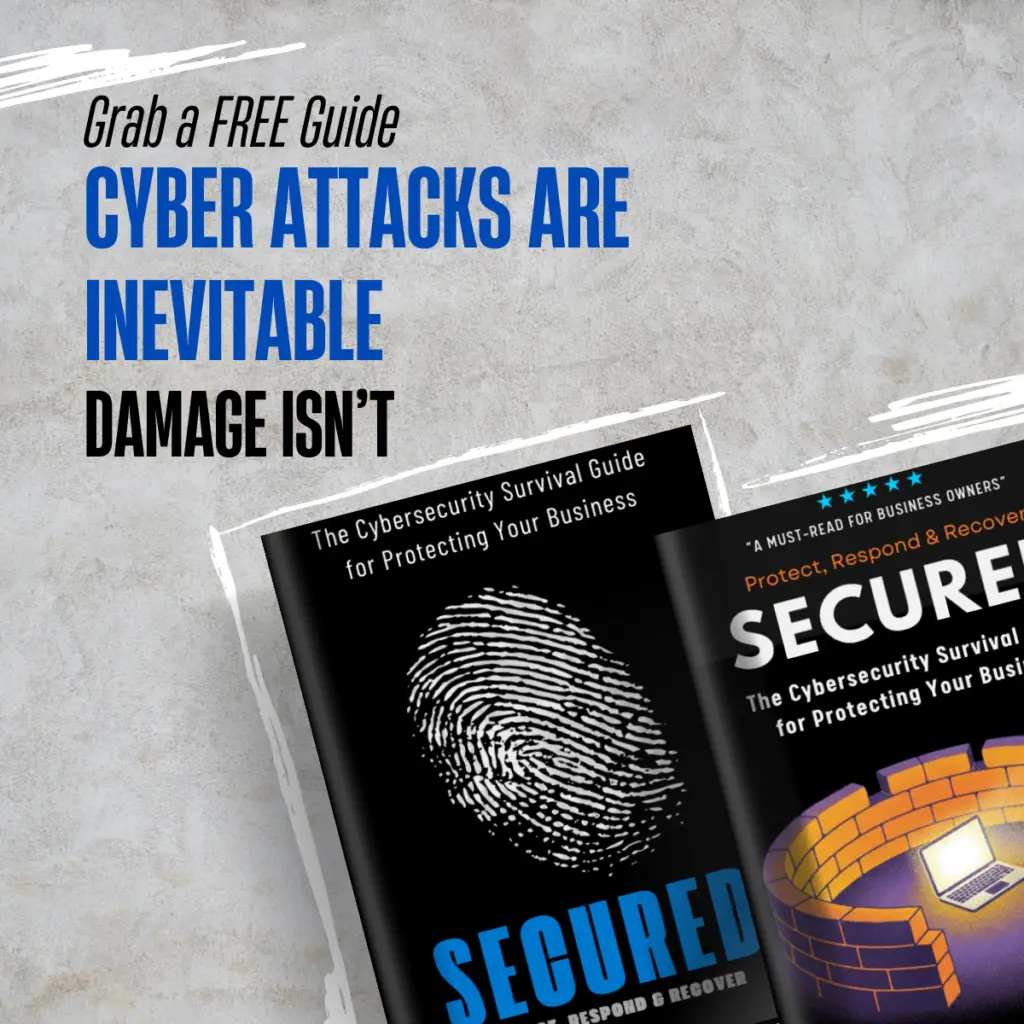
Download The SME Cybersecurity Survival Guide: a practical guide to identifying cyber risks, prioritising fixes, and preparing your business to respond effectively.
A practical, no-nonsense guide to identifying cyber risks, prioritising fixes, and responding effectively when something goes wrong.
What this guide helps you do
This guide is written for small and medium business leaders who need to make sound cybersecurity decisions without becoming security specialists.
It focuses on clarity, prioritisation, and readiness, so you can reduce risk in a structured and defensible way.
By using this guide, you will be able to:
- Understand where your most significant cyber risks exist
- Focus on security improvements that deliver real risk reduction
- Prepare your team to respond calmly and decisively to incidents
- Establish a clear cybersecurity baseline for your business
You will get instant access to the full 90+ pages book.
What’s covered in the guide
Understanding real cyber risk for SMEs
Learn what cybersecurity actually means in a business context, and why small and medium businesses are frequently targeted.
This section reframes cybersecurity as risk management, not a purely technical problem.
How to prioritise security controls
Discover a simple, structured way to decide:
- What needs to be fixed first
- What can wait
- What is often over-engineered or misunderstood
This prevents wasted effort and misallocated budgets.
Securing email, tools, and shared data
Understand how common misconfigurations and poor processes lead to fraud, data leakage, and operational disruption—and how to address them.
Preparing for third-party and supplier risk
Understand how vendors, service providers, and software platforms introduce risk—and how to manage that risk sensibly
The most common attack methods
Understand the attack patterns most often used against SMEs and how to recognise early warning signs.
This section helps you see threats before they turn into incidents.Protecting identities, devices, and access
Learn the essential practices for managing user access, securing devices, and reducing exposure from compromised credentials.
The focus is on high-impact controls, not complex tooling.
Building resilience with backups and recovery
Learn why “having backups” is not the same as being able to recover, and how to ensure your business can resume operations after an incident.
What to do when an incident occurs
Get a clear, step-by-step reference for handling a cyber incident, including:
- Immediate actions
-Decision-making roles
-Mistakes to avoid under pressure
This section is designed to be usable during real incidents.
Who this guide is for
This guide is suitable for any small or medium business that relies on digital systems to operate, communicate, invoice, or store information.
Typical roles that benefit most
- Business owners and founders
- Managing directors and partners
- Operations and finance leaders
- Managers accountable for outcomes rather than tools
Why this guide takes a different approach
Most cybersecurity issues affecting SMEs are not caused by sophisticated attacks. They are caused by:
• Poor prioritisation
• Misconfigured defaults
• Unclear ownership
• Lack of response planning
This guide focuses on decision quality and preparedness, not fear-based messaging.
Common situations this guide addresses
- “We don’t know where our biggest cybersecurity risks are.”
- “We have security tools, but no clear priorities.”
- “We want practical guidance, not another abstract framework.”
- We need to be prepared, not just hope nothing happens.”
What you should expect after reading it
• Clear visibility into your most important risk areas
• A practical, ordered improvement path
• Better conversations with IT providers and internal teams
• Increased confidence when responding to security questions or incidents
This guide is not a substitute for a formal cybersecurity assessment. It is designed to help you get organised, reduce obvious risk, and prepare for deeper work if required.
You will get instant access to the full 90+ pages book.